Car camping's real advantage
Having the vehicle beside the tent gives you dry lockable storage, a cooler that stays cold, and somewhere to cool off in the afternoon. That flexibility is what the upgrade actually buys.
How general camping, car camping, RV lots, town hotels and daily commuting compare on cost, sleep, walking distance and behavior in heavy rain.
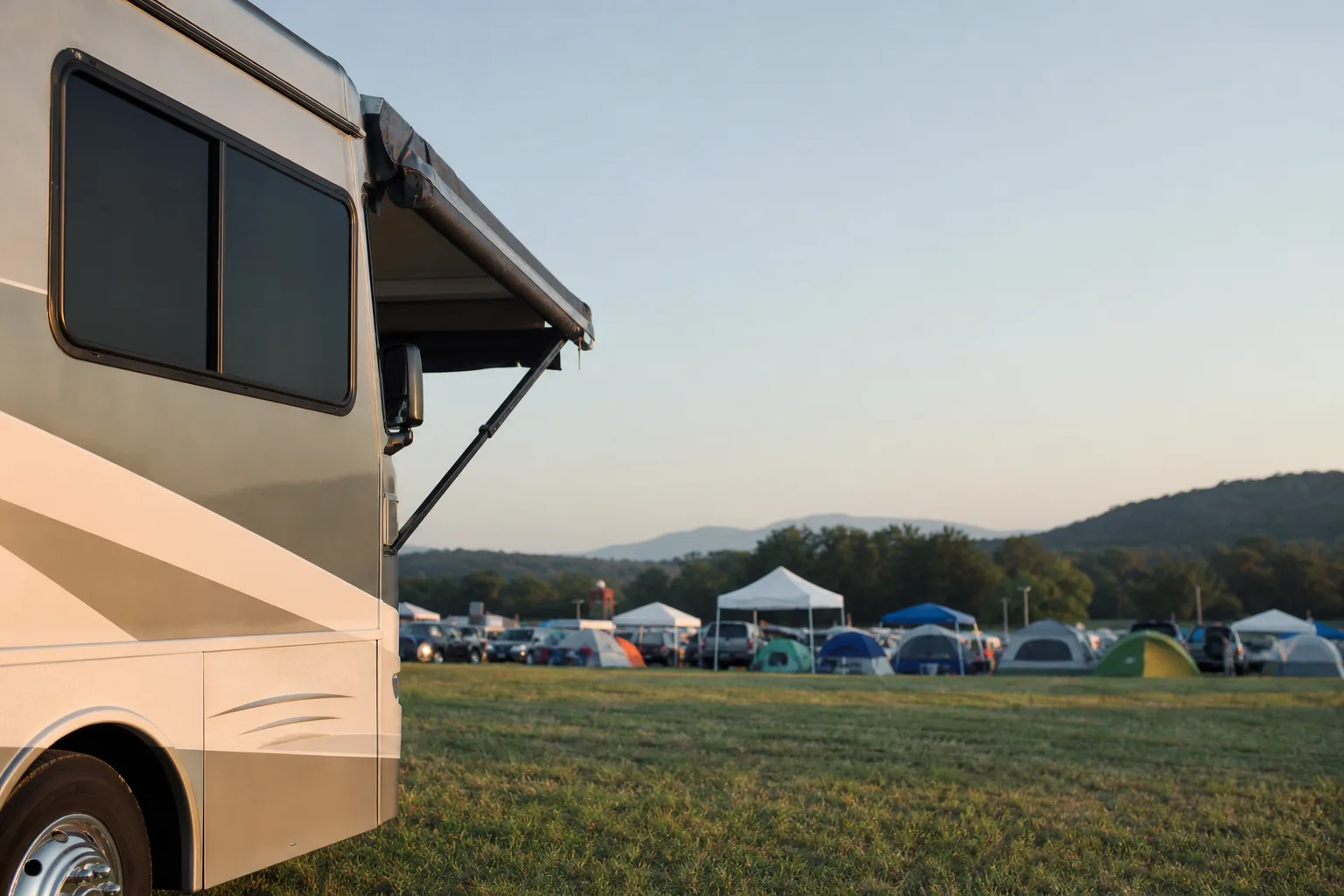
A tent in an open field becomes too hot to sleep in shortly after sunrise in midsummer. Sites along a tree line or fence stay usable an hour or two longer.
The lodging decision is usually made first and regretted last, because it is the one part of a festival weekend that cannot be changed on the Friday. A campsite reservation is rarely refundable, a hotel forty minutes out is booked solid by March, and the parking pass that lets you leave each night is a separate purchase that sells out on its own schedule. What a careful reader does before spending anything is compare the three patterns on the same four measures: total cost, hours of usable sleep, walking distance to the stages, and how each one behaves in sustained rain. Those four decide the weekend.
General camping means a numbered or unnumbered patch of field, a tent, and a walk to your car in a distant lot. Car camping puts the vehicle beside the tent, which changes everything: dry storage, a place to sit, a cooler that stays cold, and the option to run the air conditioning for twenty minutes at two in the afternoon. RV lots typically cost several times a general camping pass and may or may not include hookups, so the listing needs reading closely for water, electric, and pump-out service. The honest comparison is not tent versus RV. It is whether you are paying for a place to sleep or a place to retreat to when the day turns.
Sleep is where camping loses most consistently. Sound carries across an open field long after the last set, generators run through the night in RV rows, and a tent in an unshaded field becomes unusable by nine in the morning in July. Shade is worth more than square footage. Sites near a tree line, a fence, or the outer edge of a loop tend to sleep better than sites in the middle, and arriving early on the first day is the only reliable way to get one.
Rain is the variable that separates the three patterns fastest. A tent in a low corner of a field will take on water no matter how good the fly is, and a general camping area that has absorbed two days of foot traffic before a storm turns to mud that does not drain until Monday. Car camping recovers because there is a dry, lockable box six feet away. RV lots are usually sited on firmer ground or gravel, which is part of what the higher price buys, though a soft lot can strand a heavy vehicle until a tractor is available. Hotels are indifferent to weather until the drive home.
The practical hedge is the same across all three: a tarp under the tent trimmed smaller than the floor, a second tarp overhead, and one full change of clothes kept in the car or the room rather than the tent. The National Weather Service issues the watches and warnings that festival operations teams act on, and most large events will suspend stage activity and direct campers to vehicles or a hard structure when lightning is within a set radius. Knowing where that shelter is on Thursday costs nothing.
Rural festival grounds rarely have a hotel within walking distance. In practice the nearest chain properties sit in the closest town with an interstate exit, which can be fifteen minutes or well over an hour, and the ones inside thirty minutes book out first and often at raised weekend rates with a two or three night minimum. Check the actual driving route rather than straight-line distance, because a county road that takes eight minutes on Wednesday takes forty when it is carrying the whole event.
Then there is the exit. Everything that has been arriving over three days leaves within ninety minutes of the last headliner, through gates designed for a rural road. Waiting an hour after the set costs less than sitting in the same hour on the road, and it is quieter. Anyone driving in each morning should also confirm that day parking exists, what it costs per day, and whether re-entry is allowed, because some events sell a single-entry pass that makes a midday return to the car impossible.
Add the camping pass, the parking pass, fuel, and ice against the hotel rate times the number of nights, plus tax, plus the fuel for two round trips a day if you are coming and going. The gap is often smaller than expected once a hotel is split three ways, and it closes further when someone in the group needs reliable sleep or air conditioning for a medical reason. Mixed approaches work well: two nights camping and the last night in town, so the drive home starts from a bed rather than a wet field.
The choice that holds up is the one made with a specific site, a specific route, and a specific forecast in front of you, booked early enough that the good options are still available.