The leg that repeats
Total daily mileage matters less than the single worst stretch you walk four or five times. Campsite to gate, in the dark, carrying something, is the leg that decides your weekend.
How walking distances, shuttle schedules and a flat-bar hybrid compare for getting around a large festival ground and the town beside it, with the details worth checking first.
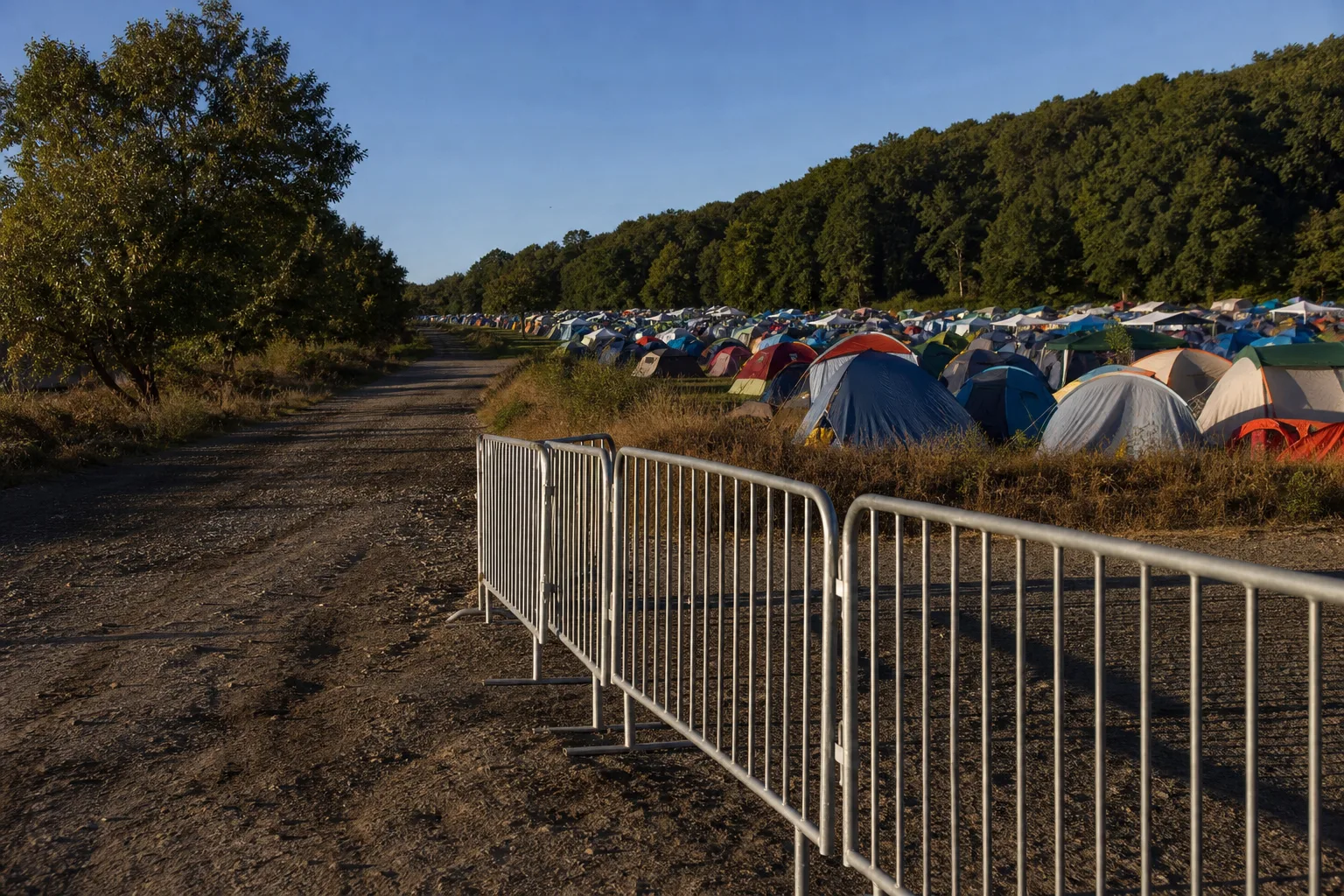
Festival maps are drawn to fit a phone screen and routinely compress long distances. Estimate real spacing using a scale bar or a known landmark such as a highway frontage before you choose lodging.
The map on the festival website is drawn to fit a phone screen, not to scale, and that is where most people's transportation planning goes wrong. A large grounds can put a mile and a half between the far campground loop and the main gate, with another half mile inside the fence between the two stages you actually care about. Over three days that adds up to real fatigue, the kind that decides whether you stay for a late set. The choice between walking everything, riding the shuttle, and bringing a bicycle is worth making deliberately, before the tickets are paid for and the lodging is locked in.
On foot, the honest number to check is not total distance but the worst single leg you will repeat several times a day: campsite to gate, gate to the far stage, and the return at one in the morning in the dark. Look at the published site map, find a scale bar or a known reference like a highway frontage, and estimate. Gravel access roads and mowed field paths walk slower than sidewalk, and a cooler or a folding chair changes the math again. Walking wins when everything sits inside about half a mile and the ground is flat, because nothing beats a plan with no equipment in it.
Shuttles are reliable in the middle of the day and unreliable exactly when you need them. Most operations run a dense headway from late morning through the dinner hours, then stretch to twenty or thirty minutes once the headliner starts, then absorb a crush of several thousand people in the forty minutes after the last note. A careful reader checks three things on the published schedule: the time of the final departure, whether that final departure is from the venue or from the lot, and whether the route runs on Thursday and Sunday at all, since many do not. Town shuttles serving hotels often stop earlier than the on-site loop, which strands people who booked a room five miles out.
A bicycle turns a fifteen-minute walk into four minutes and makes a midday supply run into town realistic. The right bike for it is a flat-bar hybrid on tires somewhere around 38 to 45 millimeters, because that combination handles chip seal, packed gravel, and rutted grass without the wallow of a suspension fork or the pinch flats of a narrow road tire. A road bike with drop bars and 25s is miserable on a campground path and hard to control in a slow-moving crowd. A full-suspension mountain bike is heavier than the terrain requires, costs more to ship, and gives you nowhere sensible to mount a rack.
Fit matters more than components here. You want to be able to put a foot flat on uneven ground at a stop, which usually means sizing slightly down from the frame you would pick for a long road ride, and a step-through frame is genuinely easier when you are getting on and off two dozen times a day, sometimes with a bag over your shoulder. Check standover clearance on grass, not on a shop floor.
A rear rack rated somewhere in the range of fifty pounds, paired with two panniers, carries a soft cooler's worth of ice, water, and food in one trip. Check the rack's stated load limit and whether your frame has eyelets, because clamp-on racks carry far less. For locking, treat a campground as a place where a cable lock is decoration: use a hardened U-lock through the rear triangle and rim to a fixed object, and understand that most tent stakes and pop-up legs are not fixed objects. Registering the serial number with local police before you travel costs nothing and helps if it goes missing.
Airline bicycle handling has improved, and the Department of Transportation oversees the baggage rules carriers publish, so the fee and liability terms are on each airline's own page rather than in a rumor. Read them the week you book, since several carriers now treat a boxed bike as standard checked baggage within normal size and weight limits. Shops in festival towns rent, but the good hybrids go early; call six to eight weeks out, ask specifically about rack availability and a lock, and confirm whether they will hold the bike past their closing time on the final day.
The version of this that works is boring: measure the legs you will repeat, read the last shuttle time, and decide whether four minutes instead of fifteen is worth a box fee and a U-lock.